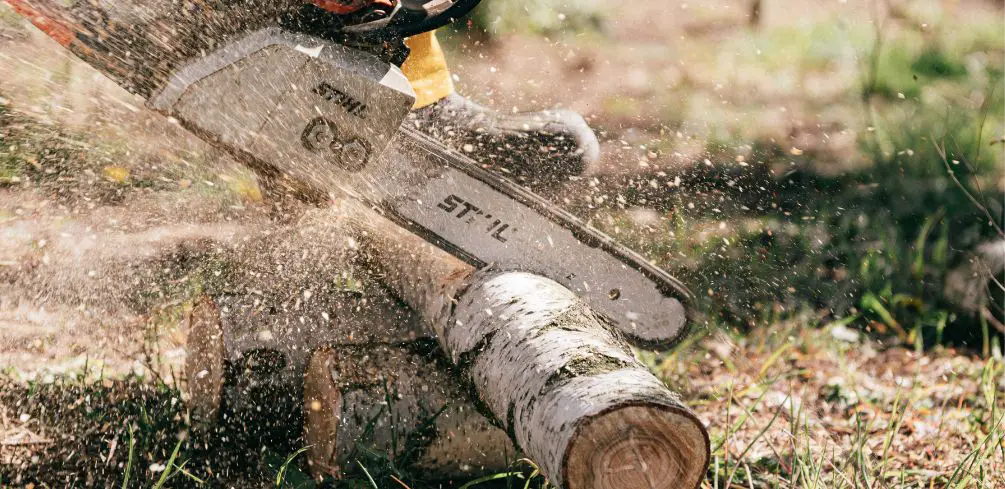
Has your chainsaw been requiring frequent repairs? Must you exert more pressure to cut through the wood with your chain saw? Then the chances are that your chainsaw is not in the best condition.
Dirt can get into all of the moving parts of your chainsaw and cause them to wear out more quickly or even stop working completely. In addition, dirty air filters can lead to problems with starting and decreased power output from your saw.
A chainsaw is an excellent tool that can almost be used anywhere for a cutting or logging project. Although such portability is convenient, you will still have to know the environments that could limit the portability of a chainsaw, its function, and its durability.
Using the chainsaw in the dirt is among such areas, and you should try your best to avoid it to ensure that the equipment remains in a proper working condition.
In most cases, cutting through dirt is accidental, especially when cutting through a large piece of material. The force that you’ll apply to the large piece of wood could easily result in the saw hitting the ground when the wood splits.
This might have several damaging impacts on your chainsaw, ruining the chain and affecting the rotating mechanisms of the chainsaw. Hence, you should practice safe chainsaw use methods to ensure that your tool remains in a working condition for long and avoid frequent changes to its chain and other parts like the motor.
Why Does Dirt Ruin A Chainsaw?
You are advised not to use your chainsaw in the dirt as described above. This is because it may be ruined in various ways, including the chains wearing out and losing lubrication, dulling of the blade, and dirt entering the motor.
Though you can prevent all these, they will ruin your chainsaw whenever they arise, prompting a need to replace some parts prematurely. Let’s look into why cutting into dirt could ruin your chainsaw.
It Could Dull The Blade/Cutters
Although the blades of your chainsaw will dull eventually and require sharpening, you might find yourself sharpening them earlier or prematurely if you use the chainsaw in the dirt. Sharp chainsaw teeth (blades) are necessary for effective and clean cutting.
But how can you know that your blade or cutters are dulling if you see the signs below:
Signs of a Dulling Chainsaw Blade or cutters
A dull blade or chain poses a bigger risk than damaging this valuable tool. The chainsaw might easily kick back, which might result in an injury.
To prevent this dangerous occurrence, look out for these five major signs:
- A rattling or jumping chainsaw while cutting
- The chainsaw is producing smoke even after oiling the chain.
- You have to exert more pressure than normal to force your chainsaw to cut.
- The chainsaw produces sawdust instead of chips or coarse strands.
- A crooked cut, though uneven teeth, may also cause this.
Whenever you notice either of the signs above, it is time to have the chain sharpened. Dull blades are a danger for the following main reasons.
Reasons to Never Cut with a Dull Blade
Unless you are an experienced logger and have been using or around a chainsaw for a long, it is inevitable to get dirt into your chainsaw. However, even the experienced loggers shouldn’t use a dull chain for the following reasons:
Shorter Life And Overheating: Cutting using a dull chainsaw will raise its engine temperatures. In the winter, fall, or spring, the increase in temperatures might not be enough to effect damage to your chainsaw.
However, if you use a dull blade during summer, you might get the tool damaged. Besides the additional load on the saw, the temperatures will also increase in the cylinder, pistons, and rings.
Keep in mind that the flywheel cooling could only handle a specific amount of heat. This might lead to the scored cylinder or broken rings.
The overheating raises the possibility of wear and tear on the chainsaw, shortening the unit’s lifespan.
Higher Fuel Consumption: If you use a dull blade, you will need more fuel. With a sharp chain, you could make your fuel go longer.
This is better for both the environment and your pocket. The sharper the blade, the lower the amount of fuel it needs to burn in cutting.
Less Efficiency: When you use a chainsaw with a dull blade, you’ll take a long time and exert more effort when cutting. By contrast, when you use a sharp chain, you aren’t trying to exert more pressure to make your chainsaw cut efficiently.
Hence, it can finish cutting faster and use less effort with a sharp blade.
Stuck or Worn Chains
A chainsaw is designed to move a link of cutters around the guide bar to cut. The process is completed by carrying a lubricated chain at speed to create a sharp surface.
Cutting through dirt will ruin your chainsaw when the dirt covers the lubricated surface or gets trapped within the chain. The efficiency and working of the saw take a toll.
Signs Of Damaged Chainsaw Chain
Considering your chainsaw’s work, you’d expect that you will have to replace the chain more frequently because of quick damage. Although the chain is designed to last for long, it might eventually arise at a time when it will get to a point where you cannot sharpen it further.
This is usually when it has sustained a lot of wear and tear, and the only logical solution is to replace it.
But how can you tell that the chainsaw’s chain is damaged where it only needs a replacement? Watch out for the signs below:
The Chain is burning the wood: Do you notice smoke emanating from the cut when using the chainsaw? That could be a sign that you should sharpen the chain.
It could also mean that there is a lot of friction in the chain due to wear and tear, and it should be replaced.
You cannot tension the chain: Has the chain tensioner reached the maximum, and there is still some slackness in the chain? That is a sign that the chain and the chain links have stretched to the point that they can no longer be tensioned and require a replacement.
If the chain is slack, it will easily jump off the bar.
The Chain is missing some teeth: Have you noticed that your chain is missing some teeth? Then that is the most visible sign that it is damaged.
Missing teeth may be because of overfilling or cutting through rigid dirt such as stones. When this happens, cutting through the wood will be difficult.
The vibrates and shakes during a cut: If your chainsaw is unstable or vibrates excessively while cutting, it needs a replacement.
The teeth or chain is chipped: The chain or teeth might also sustain damage when you inadvertently hit stones or any other stiff material when you complete the cut. The teeth or the chain’s links might get chipped.
Hence, the chain starts catching or getting hooked in the wood. This means there will be additional friction. If the chainsaw is in this condition, then it needs a replacement.
The signs above are indicators that you should inspect the chainsaw thoroughly to determine what you could do to remedy the situation. Sometimes, you might only have to do minor repairs.
However, you might also find that the chain needs a replacement to enhance its working and efficiency.
Dangers of Working With a Worn-out Chain
Besides complicating the cutting experience, a damaged chain also has other impacts that you may want to consider. A damaged chain makes the chainsaw put an extra effort into cutting through the wood.
Consequently, this puts an unnecessary strain on the chainsaw’s motor. The additional strain on the tool’s motor causes damage, prompting a need for frequent repairs and replacements of the various components of the chainsaw.
A damaged chain might make the chainsaw more kickback prone to make matters worse. Hence, the chainsaw will not be efficiently cutting, and you will have to lean more into the cut using your body.
This places you in a dangerous position if the kickback arises.
Motor And Sprocket Damage
The sprocket in your chainsaw is usually connected to its motor. It provides the driving force, enabling the chain to rotate continuously around the chainsaw’s guide bar.
The sprocket’s functionality is vital in allowing the chainsaw’s motor to function and connect the power to the unit’s chain. The chainsaw might underperform or lose functionality when the dirt is trapped inside the sprocket or enters the motor.
But dirt is everywhere, so how can you safely use the chainsaw and avoid the issues above that may ruin it? You may use strategies to cut the wood and avoid the extra drive that cuts into dust.
Cutting Safely With a Chainsaw Near Dirt
Cutting Only 90% Of The Wood
Use your chainsaw to cut until 90% of the wood. Then, rotate the wood on the side that is not cut. You could use the ax to break the part remaining. However, axes are more convenient for thicker logs.
Wipe The Wood
When you flip the wood, ensure that the other side in contact with the ground is clean. Use something to wipe it down before using your chainsaw to cut through.
This ensures that the saw doesn’t contact the dirt or sand.
Using a Log Jack
This is designed to lift wood from the ground to avoid contact with the surface below and dirt. The tool will wrap itself around the wood and use a long handle that stands at the bottom to lift the log with a high force.
The log then rests on the stand, allowing a clean cut.
Conclusion
Cutting into the dirt using a chainsaw will only damage your tool. Components such as the blades, the motor, and the sprocket will take a hit, so you may have to pay for some replacement.
But sometimes, dirt is inevitable, meaning that you must use your ingenuity to avoid cutting through it. Fortunately, there are several ways to accomplish this, such as wiping the wood or using a wood or log jack.
If you want to first dispose of the dirt we have 7 ways to do that.